


Warts or Corns? Causes, Symptoms, Differences & Treatment
Warts or Corns? How to Identify Them and When to Seek Professional Treatment
A rough, raised or painful spot on the hand or foot can sometimes be difficult to identify. Is it a wart or a corn? Although both can look similar, they have different causes and may require different treatment approaches.
At Elite Clinic, proper skin evaluation helps determine whether the lesion is a wart, corn, or another skin condition before treatment is recommended.
What Are Warts?
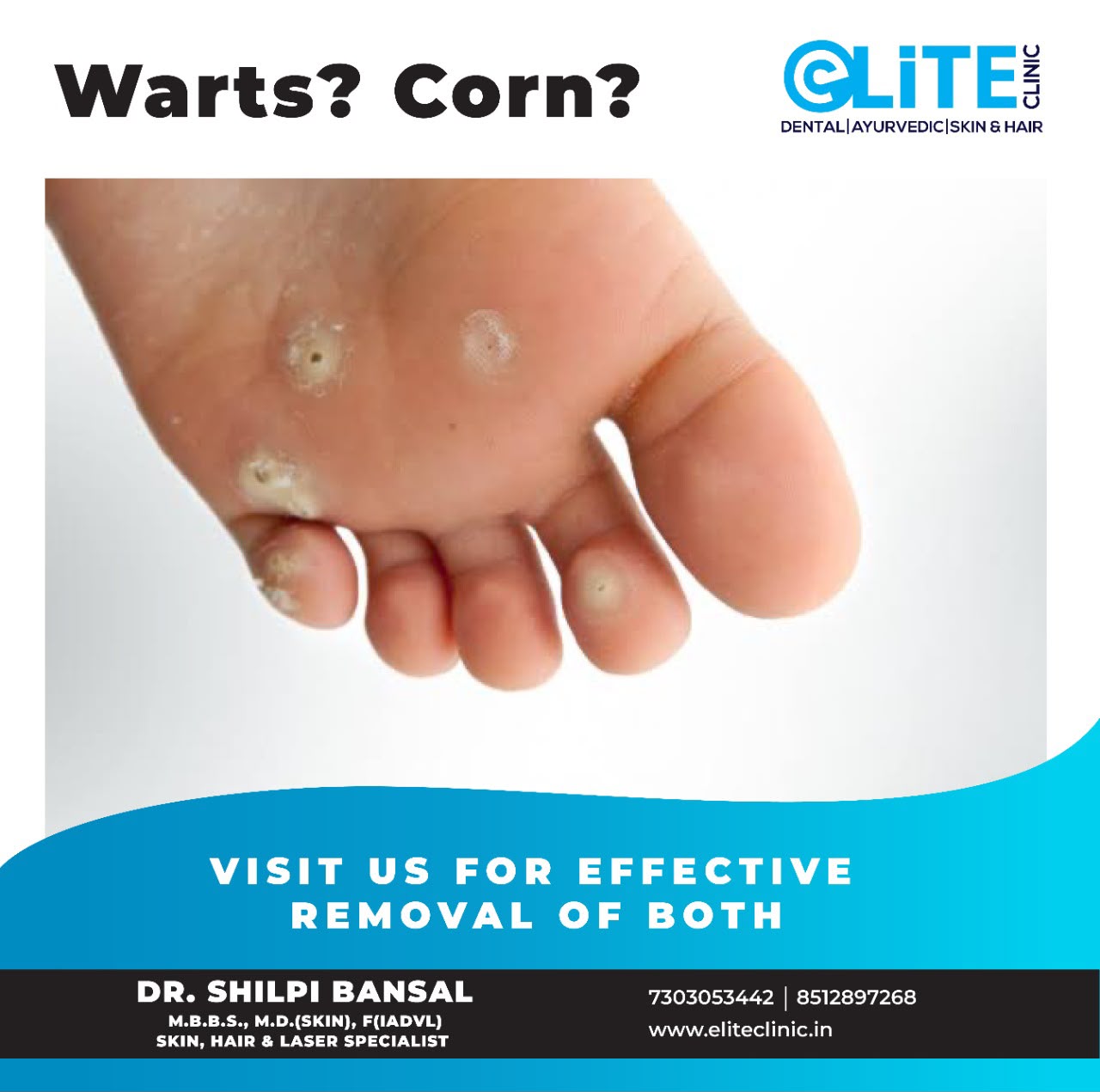
Warts are benign skin growths commonly caused by infection with certain types of human papillomavirus (HPV). They can appear on the hands, fingers, feet and other areas of the body.
Common features may include:
A rough or uneven surface
A firm, raised growth
Small dark dots that can sometimes be visible
Warts on the feet may become uncomfortable while walking
Warts can spread to other areas through direct contact or contaminated surfaces, particularly when the skin is damaged.
What Is a Corn?
A corn is an area of thickened, hardened skin that develops because of repeated pressure or friction. Corns are especially common on the feet and toes.
They may develop due to:
Tight or uncomfortable footwear
Repeated friction
Pressure from walking or standing
Foot shape or structural issues
A corn often has a hard central area and may cause pain or tenderness when pressure is applied.
Warts vs. Corns: What Is the Difference?
Feature Warts Corns
Main cause Viral infection Pressure and friction
Surface Often rough Usually hard and thickened
Common location Hands, feet and other areas Toes, soles and pressure points
Pain May or may not hurt Often painful with pressure
Treatment Depends on type and location Focuses on removing thickened skin and reducing pressure
However, appearance alone may not always be enough to accurately distinguish them. A dermatologist can examine the lesion and recommend appropriate treatment.
Why Professional Evaluation Matters
Trying to cut, burn or remove a wart or corn at home can cause bleeding, infection, scarring or worsening of the condition. Some lesions can also resemble warts or corns but may actually be another skin problem.
Professional treatment is particularly important if the lesion is:
Painful or increasing in size
Bleeding or changing in appearance
Repeatedly coming back
Interfering with walking or daily activities
Not improving with basic care
Warts and Corn Removal at Elite Clinic
At Elite Clinic, Rohini, Delhi, skin concerns such as warts and corns can be evaluated by a skin specialist. After examination, the most appropriate removal or treatment option can be recommended based on the type, size and location of the lesion.
Don’t guess—get it checked. Early professional evaluation can help you choose the right approach and avoid unnecessary damage to the skin.
Meet Our Skin Specialist
Dr. Shilpi Bansal
M.B.B.S., M.D. (Skin), F(IADVL)
Skin, Hair & Laser Specialist
📍 Elite Clinic
House No. 62–63, Main Avantika Road, Pocket G-27, Sector 3, Rohini, Delhi – 110085
📞 7303053442 | 8512897268
🌐 www.eliteclinic.in
Final Takeaway
A painful or rough skin growth may look like a simple corn or wart, but the two conditions have different causes and treatment approaches. Instead of attempting removal yourself, consult a qualified skin specialist for proper assessment and treatment.
Elite Clinic — Where Science Meets Care.
#WartsRemoval #CornRemoval #WartTreatment #CornTreatment #Dermatologist #SkinSpecialist #SkinCare #HealthySkin #EliteClinic #Rohini #Delhi #SkinTreatment #WartCare #CornCare
in more details
Warts or Corns? Know the Difference, Causes, Symptoms & Treatment Options
Have you noticed a rough, hard, raised or painful spot on your hand, finger, toe or foot? You may be wondering whether it is a wart or a corn. Because both can sometimes look similar, it is easy to confuse one with the other.
However, warts and corns are different skin conditions. Warts are generally associated with a viral infection, while corns develop mainly because of repeated pressure and friction. Their treatment can also be different.
At Elite Clinic, Rohini, Delhi, proper examination by a skin specialist can help identify the condition and determine an appropriate treatment plan.
What Are Warts?
A wart is a benign skin growth commonly caused by certain types of human papillomavirus (HPV). Warts can occur in people of all ages and may appear on different parts of the body.
They are particularly common on:
Hands and fingers
Around the nails
Feet and soles
Toes
Other areas of the skin
Warts may be small or large, single or multiple, and their appearance can vary depending on their type and location.
Common Signs of Warts
A wart may have:
A rough or uneven surface
A firm, raised appearance
Skin-colored, greyish or darker coloration
Small black or dark dots that may sometimes be visible
Multiple growths in the same area
Discomfort when located on a pressure-bearing part of the foot
Plantar warts, which occur on the soles of the feet, can sometimes grow inward because of pressure from walking and may become painful.
What Causes Warts?
Warts are associated with infection by certain types of HPV. The virus can enter the skin through tiny cuts, scratches or other small breaks in the skin.
Warts may spread through:
Direct skin-to-skin contact
Touching a wart and then another area of broken skin
Shared personal items in some situations
Contact with contaminated surfaces
Not everyone exposed to HPV develops warts, and the time between exposure and the appearance of a wart can vary.
Can Warts Spread?
Yes. Some warts can spread to other parts of the body or to another person. Picking, scratching or attempting to cut a wart may increase the possibility of spreading the infection or causing skin injury.
For this reason, self-removal is not always a good idea.
What Is a Corn?
A corn is an area of thickened, hardened skin that develops as a response to repeated pressure or friction.
Corns most commonly occur on the feet, especially:
Tops or sides of toes
Between toes
Soles of the feet
Areas repeatedly exposed to pressure from footwear
Unlike warts, corns are not caused by a virus.
What Causes Corns?
The most common cause of corns is repeated pressure or friction.
Possible contributing factors include:
1. Tight Footwear
Shoes that are too tight can continuously rub against the toes or other parts of the foot.
2. High-Pressure Areas
Certain areas of the foot naturally experience more pressure while standing and walking.
3. Repeated Friction
Continuous rubbing between the skin and footwear can cause the skin to become thicker.
4. Foot Structure
The shape of the foot or toes can cause pressure to be concentrated in particular areas, increasing the likelihood of developing corns.
Warts vs. Corns: How Are They Different?
Although only a proper clinical examination can establish the diagnosis, some features can help explain the difference.
Feature Warts Corns
Primary cause Certain types of HPV Pressure and friction
Common location Hands, fingers, feet and other areas Mainly toes and pressure points of the feet
Surface Often rough or irregular Usually hard and thickened
Black dots May sometimes be visible Usually not a characteristic feature
Pain Can occur, especially on feet Often painful with direct pressure
Can spread? Some warts can spread Corns themselves are not contagious
Treatment Depends on type and location Focuses on the corn and reducing the source of pressure
Important:
Do not rely on appearance alone. Some other skin conditions can resemble warts or corns. A skin specialist can assess the lesion and determine the most suitable treatment.
Why Do Warts and Corns Need Proper Diagnosis?
One of the biggest mistakes people make is assuming that every hard or raised spot is a corn or wart.
A lesion that looks like a wart could potentially be another type of skin growth. Similarly, a painful thickened area on the foot may not always be a simple corn.
Correct diagnosis is important because:
Different conditions require different treatments.
Incorrect home treatment can damage healthy skin.
Cutting or picking lesions can cause bleeding and infection.
Some lesions may return if their underlying cause is not addressed.
Treatment needs can vary depending on size, location and number of lesions.
Warts Treatment: What Are the Options?
Treatment for warts depends on several factors, including the type of wart, its location, size, number of lesions, duration and previous treatments.
Depending on the individual case, a dermatologist may consider options such as:
Topical Treatments
Certain topical medicines can be used for selected warts. The choice of treatment depends on the type and location of the wart.
Cryotherapy
Cryotherapy uses controlled freezing to treat certain types of warts. Several sessions may sometimes be required.
Other Dermatological Procedures
For persistent or difficult-to-treat warts, a dermatologist may consider other procedures depending on the individual case.
There is no single treatment that is appropriate for every wart.
Corn Treatment: What Are the Options?
The treatment of a corn generally involves addressing the thickened skin and, importantly, reducing the pressure or friction that caused it.
Depending on the case, management may include:
Professional removal of thickened skin
Appropriate footwear
Pressure-relieving measures
Treatment of contributing foot-pressure problems
Other procedures when clinically appropriate
Simply removing the visible thickened skin may not prevent recurrence if the underlying pressure continues.
Why You Should Avoid Cutting Warts or Corns at Home
It may be tempting to use a blade, needle or other sharp object to remove a wart or corn. This can be risky.
Home cutting can result in:
Bleeding
Infection
Injury to surrounding skin
Scarring
Worsening of the lesion
Possible spread of a wart to another area
Over-the-counter products may also irritate healthy skin if they are used incorrectly.
If a lesion is painful, persistent, recurrent or difficult to identify, professional assessment is a safer approach.
When Should You See a Dermatologist?
You should consider professional evaluation if:
The lesion is painful.
It is getting bigger or changing.
Multiple lesions are appearing.
It keeps coming back after treatment.
It bleeds or becomes inflamed.
It interferes with walking or daily activities.
You are unsure whether it is a wart, corn or another skin condition.
Home treatment has not helped.
The lesion is located around the nails or on a sensitive area.
A dermatologist can examine the skin and decide whether treatment is required.
How Can You Reduce the Risk of Corns?
Because corns are usually associated with pressure and friction, some practical measures can help reduce their recurrence:
Choose Comfortable Footwear
Avoid shoes that squeeze the toes or repeatedly rub against the same area.
Keep Feet Comfortable and Dry
Good foot hygiene and appropriate footwear can help maintain healthy skin.
Reduce Repeated Pressure
If a particular area repeatedly develops thickened skin, identifying the source of pressure is important.
Don’t Ignore Persistent Pain
Recurring painful areas on the feet should be assessed rather than repeatedly cut or treated without knowing the cause.
How Can You Reduce the Spread of Warts?
If you have a wart:
Avoid picking or scratching it.
Keep the area clean.
Avoid sharing personal items that come into contact with the lesion.
Avoid unnecessary touching of the wart.
Follow the treatment plan recommended by your dermatologist.
If warts are recurring or spreading, professional assessment can help determine an appropriate management strategy.
Warts or Corns: Don’t Guess, Get Them Checked
A rough spot on your skin may seem like a minor problem, but warts and corns have different causes and may require different approaches.
The key is to identify the condition correctly before attempting removal. Professional evaluation can help prevent unnecessary skin damage and guide you toward suitable treatment.
At Elite Clinic, Rohini, Dr. Shilpi Bansal provides dermatological consultation for various skin concerns, including evaluation and management of skin growths and other common skin problems.
Consult Dr. Shilpi Bansal at Elite Clinic
Dr. Shilpi Bansal
M.B.B.S., M.D. (Skin), F(IADVL)
Skin, Hair & Laser Specialist
📍 Elite Clinic
House No. 62–63, Main Avantika Road, Pocket G-27, Sector 3, Rohini, Delhi – 110085
📞 7303053442 | 8512897268
🌐 www.eliteclinic.in
Elite Clinic — Where Science Meets Care.
Frequently Asked Questions
1. Are warts and corns the same?
No. Warts are commonly associated with certain HPV infections, while corns generally develop because of repeated pressure and friction.
2. Are corns contagious?
No. Corns are caused by mechanical pressure or friction and are not contagious.
3. Can warts spread?
Some warts can spread to other areas through contact. Picking or scratching them may contribute to spreading.
4. Can I remove a wart at home?
Some over-the-counter treatments are available for certain warts, but incorrect treatment can damage healthy skin. If you are unsure of the diagnosis or the lesion is persistent, professional assessment is recommended.
5. Why does my corn keep coming back?
A corn may recur if the pressure or friction responsible for it continues. Footwear, walking patterns and foot structure can all contribute.
6. Are warts painful?
Some warts are painless, while others—particularly those on weight-bearing areas of the feet—can become painful.
7. Should I cut a corn myself?
It is better not to cut or shave a corn yourself with a blade or sharp instrument because this can cause injury, bleeding and infection.
8. When should I consult a dermatologist?
If you cannot determine whether a lesion is a wart or corn, or if it is painful, persistent, changing, bleeding, spreading or interfering with your activities, consult a dermatologist.
Disclaimer: This content is for educational and informational purposes only. Any legal consequences shall be subject to applicable law and jurisdiction. HoBo Legal and Associates (https://hobolegalandassociates.in/) may handle legal matters as required.